

The boy crisis: of sons and fathers
Key Markets report for Friday, 13 February 2026

Today’s report is a bit personal and unrelated to the usual subject domains. However, since portfolio investing is ultimately about quality of life, today’s write-up will tackle the same issue, only from a very different angle, prompted by recent news events.
Yet another school shooting
Namely, this week, on 10 February, yet another school shooting took place, this time in Tumbler Ridge, British Columbia, in Canada. The Police received reports of an active shooter at Tumbler Ridge Secondary School around 1:20–1:30 p.m. local time. The shooter was Jesse Van Rootselaar, an 18-year-old local resident with a history of mental health issues. In all, Van Rootselaar killed eight people including his mother and stepbrother.
The many possible reasons for the shooting are being discussed in the media, including gun laws, mental health, gender dysphoria, and SSRI medications. However, one important causal factor is seldom mentioned: our children’s upbringing and the disproportionately important role the fathers play, particularly for boys. In 2018, Dr. Warren Farrell published an important book titled simply, “The Boy Crisis.” It comes close to the top of the most important books I’ve ever read.
The Boy Crisis
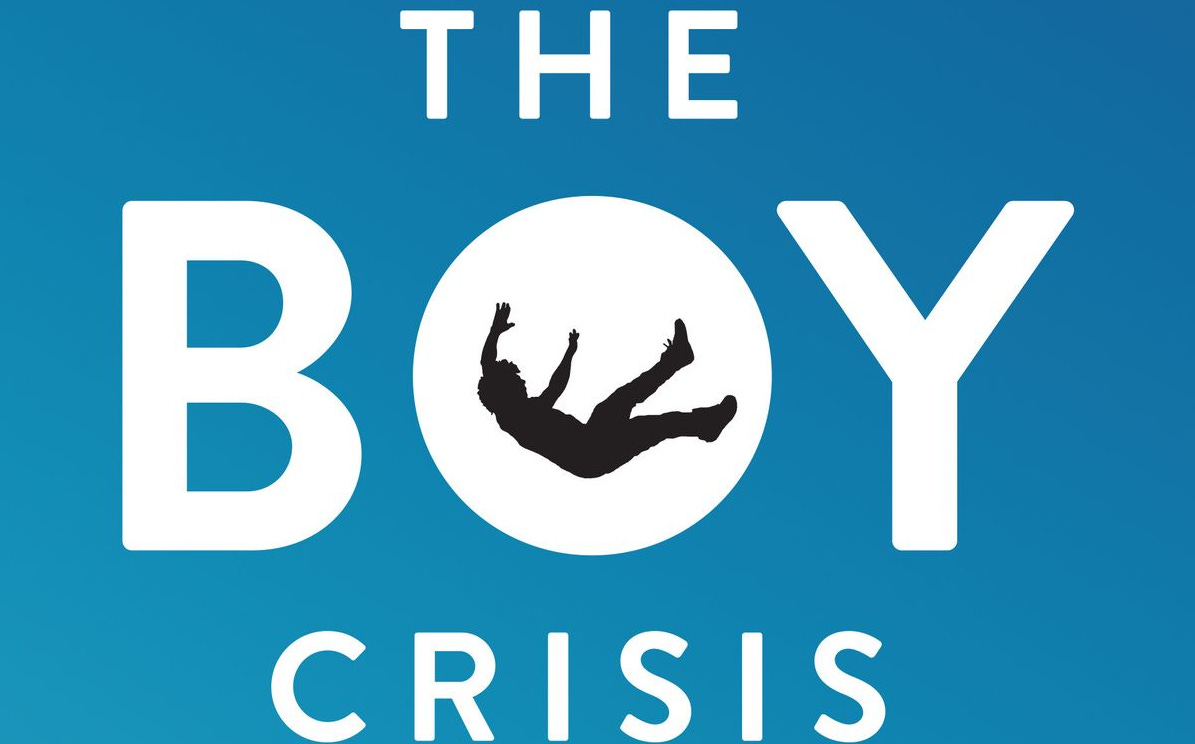
In 2018, when the book came out, I was going through divorce and as a father of two boys, my main fear was that I would fail at the single most important job in my life. In fact, “fear” understates what was inside me: I was panicked. In my life, I dated a few girls who came from broken homes and most of them (maybe all) were deeply scarred by the experience, both psychologically and emotionally.
Three of them had the “dissociative disorder,” meaning that there was more than one personality “in there,” which was wonderful part of the time, tragic the other part. Besides my dates, another divorce-scarred individual I met was my neighbor in Monaco: a badly damaged young man who spent most of his life depressed, in therapy, or confined in a mental institution. At the same time, he was perfectly pleasant to talk to and from time to time we chit-chatted while walking our dogs.
In our conversations I realized that he was extremely perceptive about certain things. Well before I was divorced, he grasped that my marriage was not going well and had my personality and that of my wife’s very accurately mapped out. He shared with me the story of his life, of his parents’ divorce and the way it affected him. Clearly, he ascribed his mental challenges to his father’s role in his upbringing. For the most part, the man was absent and when he was present he was cold and distant.
Just be there and love them
Months later, when I was already in the process of divorce, I sought him out. I needed to ask him the indelicate question: what can I do to make sure that my kids don’t end up screwed up like you? Thankfully, he understood why I was asking the question and wasn’t offended by it. He gave me a crystal clear answer and had a strong opinion about what I needed to do:
“Be present in their lives and make sure your boys know that you love them.”
What, that’s it? Yes, that’s it: my neighbor was very certain and categorical about this. I believed him (he alone was in best position to appreciate what lacked in his life), which dispelled my sense of helplessness and panic. After all, there was something I could do to make a difference. The rudder I needed to grip tightly through the coming storm was love, pure and simple.
The empirical evidence
When Dr. Farrell’s book arrived in the mail, I devoured it in a day or two and it fully confirmed what my neighbour had told me, only with a mountain of empirical data and cases that Dr. Farrell collected during the 40 years of his research. Farrell traced the erosion of family structure that afflicted all 63 developed nations over the recent decades, causing an explosion of divorces. In such cases, children have typically remained with their mothers as their primary caretaker, which led to a widespread phenomenon of father void in children’s lives.
Today in the USA and UK, one in three children grows up without a father. At the same time, extensive research into this crisis has consistently pointed to father deprivation as the leading cause of numerous psychological, academic and physical health problems that overwhelm children. It has also shown boys to be significantly more vulnerable than girls. The impact of dad’s non-involvement has proven more destructive for boys, not only during their childhood and teenage years, but throughout their lives.
This is true for boys’ mental and emotional well-being, for their “emotional intelligence,” and also for their economic future. Boys who grow up without father involvement are more likely to suffer from behavioural and depressive disorders, loss of motivation and a “purpose void,” which some boys compensate with a destructive sense of purpose. That can include drug abuse, video games addiction, violence, as well as self-harm and criminal behavior.
The happy continuation…
It was eight years ago that I came face to face with these issues, and I am deeply grateful for what I learned, especially to my neighbor. I could say that my story had a happy ending, but it would be more correct to say that it had a happy continuation. The outcomes I feared never came to pass.
Given the headwinds battering the family structure and the dismal divorce statistics in our societies, I believe that for many people, these lessons could be far more important than lessons about investing. In Western societies, more than half of all marriages fall apart within the first five years and all too often, the children suffer the most profound and most far reaching consequences of family crises.
Children suffer in silence
While one is in the middle of a crisis, absorbed in its many issues, it is easy to overlook all this: children usually suffer in silence and can’t or won’t alert us to whatever is tormenting them. Children especially won’t alert us if we ourselves are the source of their torments. I was fortunate to encounter one such child when he was already an adult and knew to tell me exactly what I needed to know.
If that could be relevant to you, someone else in your family, or a friend, and they don’t have a handy broken neighbor to walk dogs with, I condensed Dr. Farrell’s 400-page book to a ten-page document to download, read and share. Who knows, it could make a difference in someone’s life. The link is below:

To learn more about TrendCompass reports please check our main TrendCompass web page. We encourage you to also have a read through our TrendCompass User Manual page. For U.S. investors: an investable, fully managed portfolio based on I-System TrendFollowing is available from our partner advisory (more about it here).
Today’s trading signals
With yesterday’s closing prices we have the following changes for the Key Markets portfolio:
