

Bull run, then an epic crash...
Key Markets report for Tuesday, 28 April 2026

In a recent, finance-oriented podcast, the host asked me what was in store for equity markets. He marvelled that, in spite of the confluence of multiple political, social, economic, trade, and geopolitical crises around the world, the stock markets keep soaring, setting one record after the next as if the conditions were the bestest of the best.

Are the markets being manipulated? My interviewer was implying that Trump was doing this with his social media posts and statements to the press. Are stocks rising because the wars are good for the military-industrial-complex and related industries? Could it be that the AI bubble is still driving stock valuations? I explained my belief that all those explanations could only have marginal influence on the overall trajectory of stock prices and that the key, most likely, is in the actions of monetary authorities.
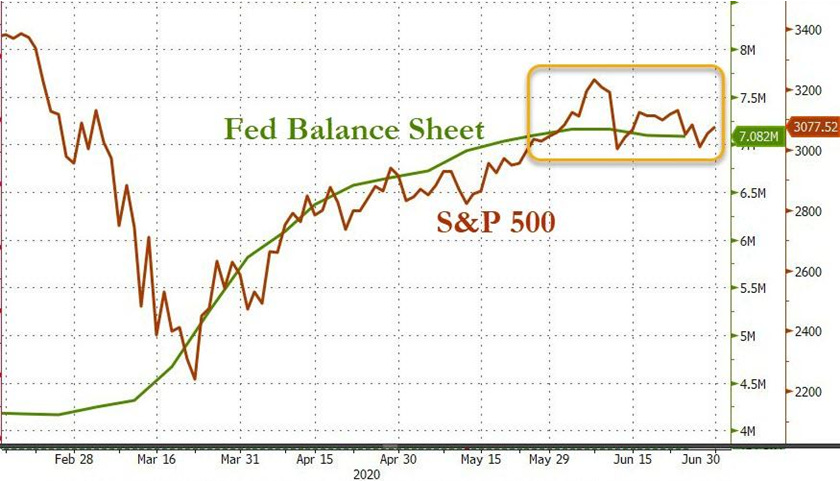
If they are flooding markets with liquidity, stock markets will rise; if they withdraw liquidity, markets will crash. This cause-and-effect relationship is almost unmistakable, trumping all other factors that are being discussed 24/7 on CNBC, Bloomberg TV and in other financial media. This could be one of the most important lessons I learned during my career in financial services, but it pretty much took me a lifetime to learn it, since it’s not offered on a silver platter.
I articulated the idea in a 2019 article I published on my website, “The One Force Moving Stock Prices and What it Tells Us About the Future.” The following chart further corroborates the principle:
Another confirmation came from Stanley Druckenmiller, one of the original Market Wizards:
“Earnings don’t move the overall market, it’s the Federal Reserve Board… focus on the central banks, and focus on the movement of liquidity… most people in the market are looking for earnings and conventional measures. It’s liquidity that moves markets.”
If this is the case, you’d expect that market experts would explain this to the public and that all the pundits in financial media should be laser-focused on Federal Reserve Board’s actions and measures of market liquidity. Since they’re not doing this, you might wonder why that is?
It’s not just the Fed…
I suspect that the reason stocks have been soaring again recently is liquidity is again flooding into the markets, only it wasn’t just the Fed this year. Federal Reserve’s balance sheet, which has been shrinking for nearly four years since April 2022, has resumed an expansionist trajectory this year. It was at $6.574 trillion in the beginning of January, expanded by about 2% (in less than four months), to $6,707 trillion.
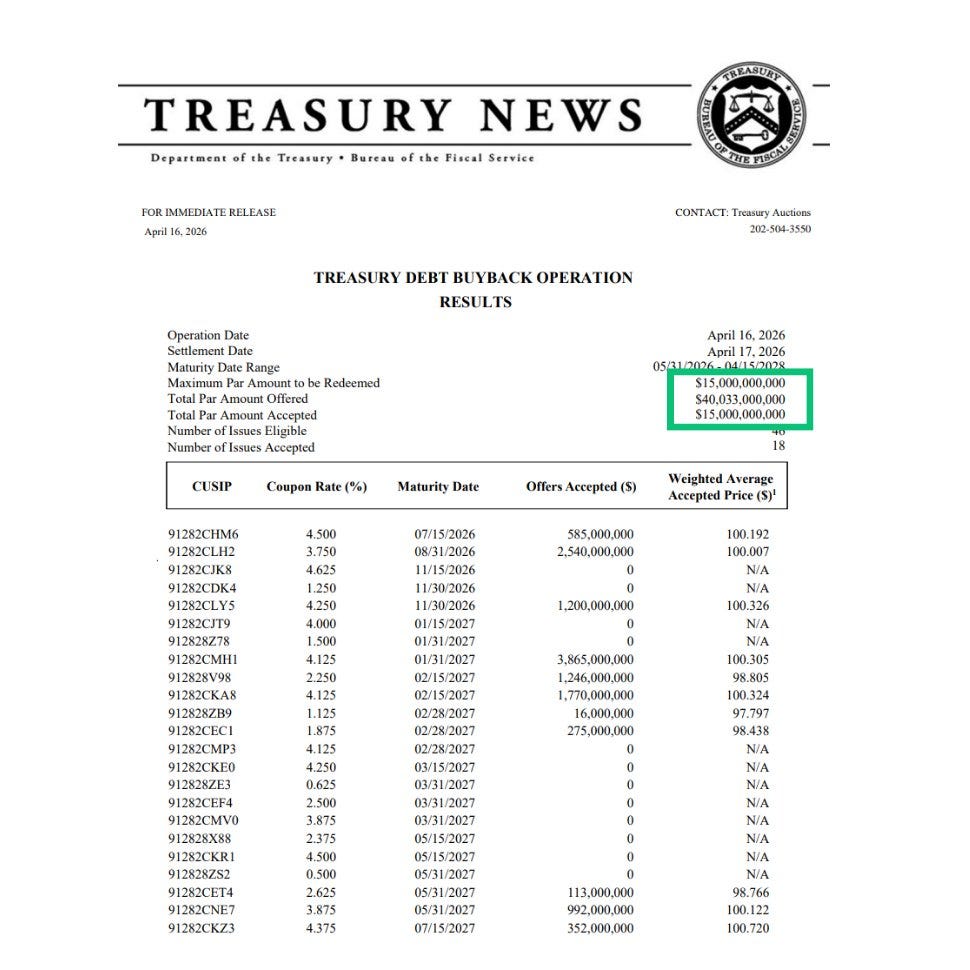
But the Fed has only been a part of this story. The U.S. Treasury released $90 billion from its Treasury General Account (TGA) earlier this month in addition to a a record $15 billion debt buyback operation.
The great current account reversal
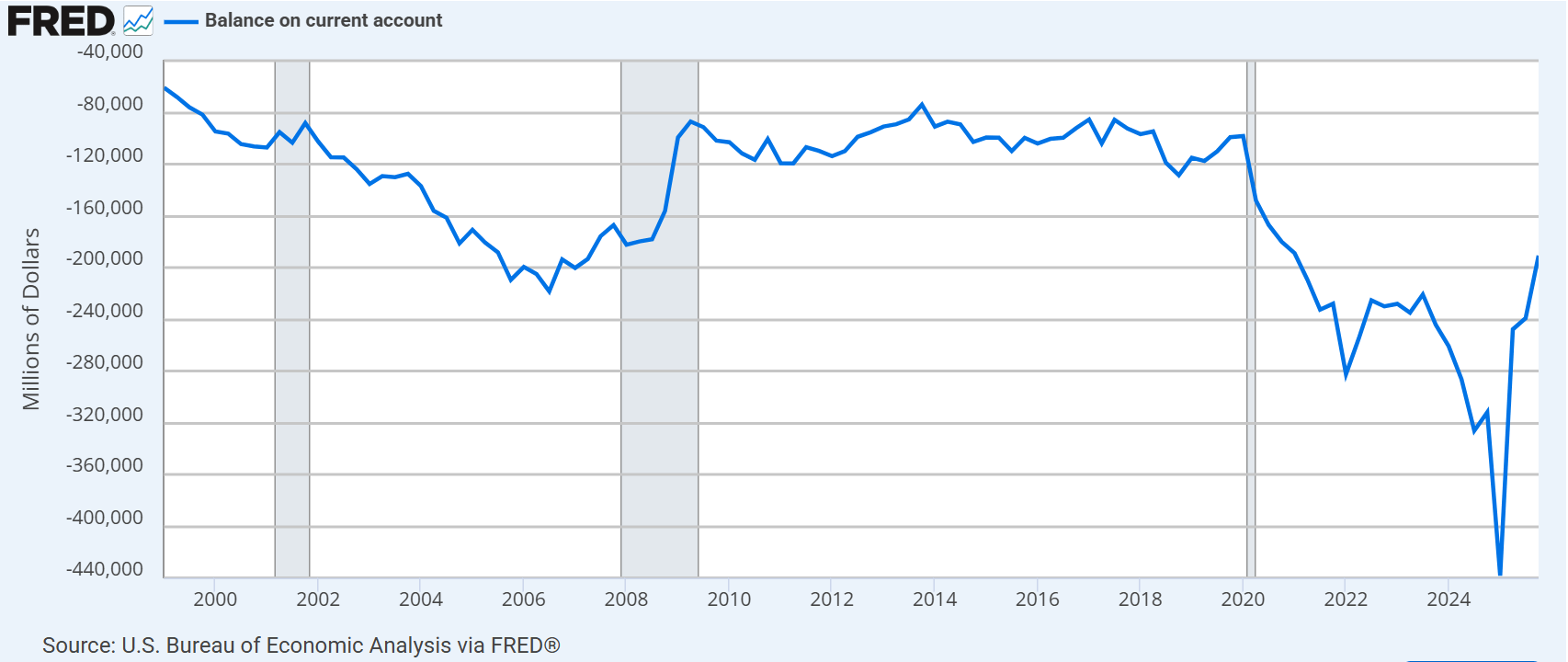
Another factor that may be impacting liquidity in U.S. markets is its trade balance, the difference between goods and services imported into and exported out of the U.S. Since the early 1990s, the United States consistently had negative trade balance which hovered around $40 billion/year from 2010 until 2020, when it exploded, reaching an all-time-high of nearly $136 billion by March 2025.
Foreign trade tends to remove liquidity from the system, since the dollars spent on imports drain outside of the domestic economy and end up in foreign suppliers’ current accounts held with the Federal Reserve. A trade deficit means that more money is draining out of the economy than is flowing back in, and this has disinflationary influence, including on stock prices.
Since the Trump administration took over, trade deficit has been reduced by nearly 60%, from $136 billion to $57 billion. Foreign trade is the main driver behind the U.S. current account balance leading to a similarly sharp reversal, from -$438 billion in Q1 2025 to “only” -$191 billion in Q4 2025, a 56% reduction:
In all, U.S. equity markets seem to have absorbed liquidity from more than one source during the recent months, and in all likelihood this will continue. The markets may sustain corrections from time to time, but I believe that monetary authorities will continue to “support” the markets and prevent them from crashing.
Bull run, then an epic crash
Once we understand the forces pushing stock prices higher, we need not wonder whether there’s a disconnect between the prices and the market fundamentals. My conclusion in 2019, which I believe has aged rather well, was that the Fed had no other option but to keep inflating asset bubbles, requiring an ever-expanding “quantitative easing:”
“This may have sealed the endgame: an accelerating bull run accompanied by hyperinflation after which comes an epic crash.”
It’s been over six years since I made that prediction and so far, the prevailing trends have held. Of course, I had no idea when that “epic crash” might happen, and I still don’t; there’s no predicting how high, or for how long the bull run might continue. Fortunately, what we can predict is that just as the (still) current bull market unfolded as a trend, so will that epic crash.
Navigating both sides of the cycle will require patient and disciplined adherence to trend following strategies such as those generating the trading signals in this newsletter. They don’t attempt to predict the unpredictable; they only react to market events as they unfold.
To learn more about TrendCompass reports please check our main TrendCompass web page. We encourage you to also have a read through our TrendCompass User Manual page. For U.S. investors: an investable, fully managed portfolio based on I-System TrendFollowing is available from our partner advisory (more about it here).

Today’s trading signals
With yesterday’s closing prices we have the following changes for the Key Markets portfolio:
