

Middle East on the verge of a major escalation
Key Markets report for Tuesday, 2 June 2026

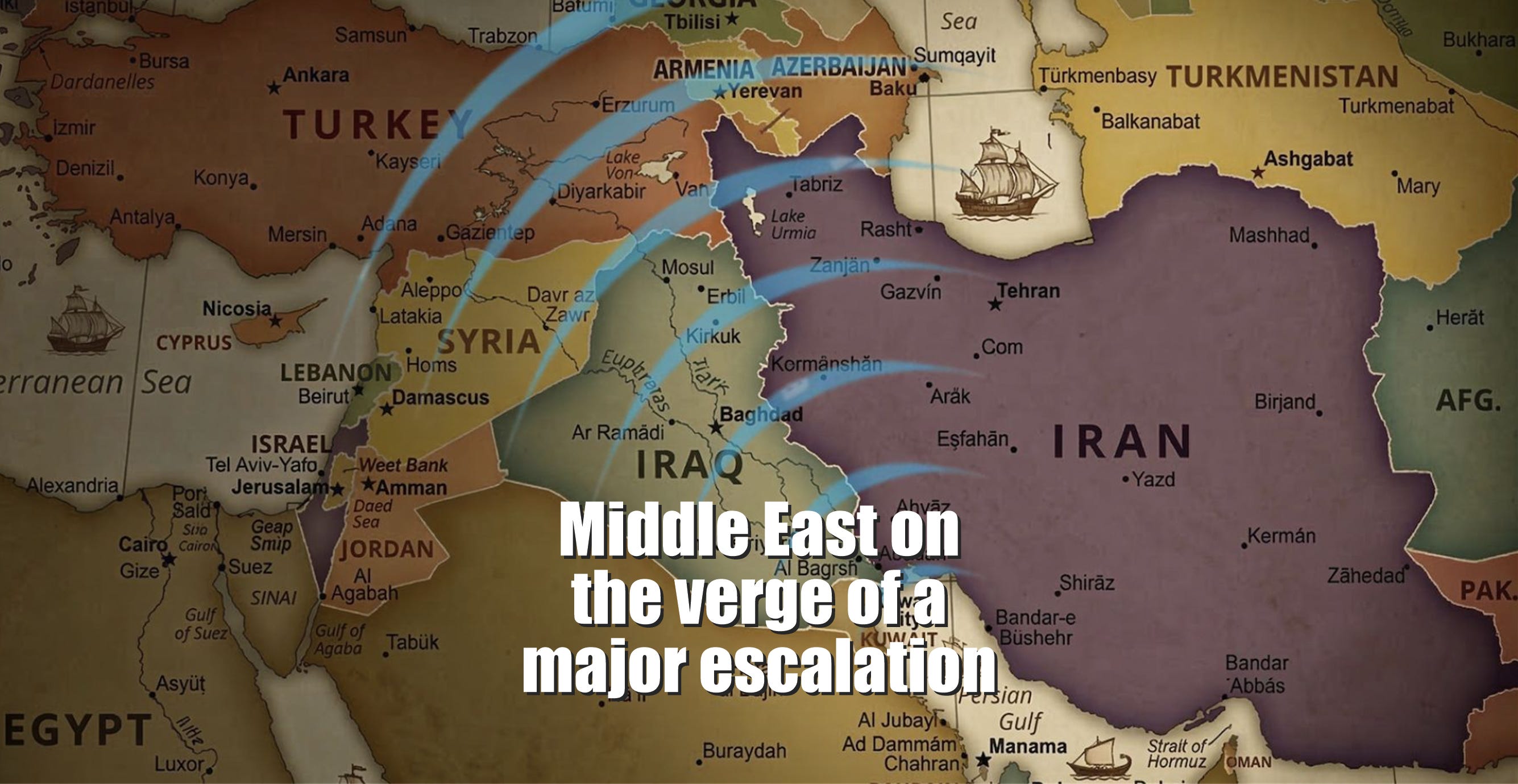
The situation in the Middle East conflict significantly deteriorated yesterday. According to the Iranian state news agency Tansim, official Tehran suspended all negotiations with the US, over continued Israeli strikes on Lebanon. Tehran has demanded a complete halt to all military operations in Gaza and Lebanon and vowed that there would be no further dialogue until those conditions are met, threatening to block both the Strait of Hormuz. This time, the Bab el-Mandeb strait could also be blocked, which would very significantly worsen the economic fallout from the crisis.
Over the recent days, Trump has insisted that talks are “continuing at a rapid pace” (again), and expressed optimism about reaching a deal (e.g., to reopen the Strait of Hormuz and extend the ceasefire) “over the next week.” It was unclear however, what deal Trump was referring to, because over the weekend, his administration sent a revised, tougher proposal to the Iranians.
The “proposal” amounted to a one-page memorandum of understanding, but it nevertheless put forward stricter terms on Iran’s nuclear program, reopening the Strait of Hormuz without restrictions and an extension of ceasefire, potentially for 60 days (we are now nearly 40 days into the first 60-day ceasefire). There has been no direct or indirect official response at all from Tehran.
Two spoilers
Two issues seem to have derailed the progress of these indirect talks. Firstly, Iran has zero trust in any US commitment toward the resolution of the conflict. According to a statement by the Iranian MP Nabavian, who was part of the Iranian delegation in Islamabad, Tehran believes that the U.S. is testing the Iranian government, rather than seeking a real, bona fide agreement to end the war. The purpose of that testing, as the Iranians see it, is to prepare another American/Israeli attack in the near future.
The second spoiler is that Iranians have been consistent in their demand that the ceasefire must include Israel and Lebanon. That seems to have been the key obstacle to the peace process. In the last three days (May 30–June 2, 2026), Israel intensified its airstrikes, artillery shelling, and ground operations in the south of Lebanon, capturing the strategic position of Beaufort Castle and issuing orders for strikes on Beirut’s southern suburbs (Dahiyeh). Hezbollah responded with rocket barrages toward northern Israel. Yesterday, Israeli Defense Minister ordered expanded strikes on souhern Beirut, ordering the local residents to evacuate the area.
Does Iran prefer war?
Iran leadership’s suspicion that the U.S. is not negotiating in good faith, but rather testing them to prepare future attacks imposes a choice: do we fight a war now, or do we do it later? If they are convinced that war is inevitable, they might prefer to fight it sooner, rather than giving their enemies time to plan and prepare their next attack. This, in part, could be the reason why they are insisting that ceasefire must include Israel and Lebanon: they know that Israel won’t abide by any ceasefire, which in turn, gives them a way out to avoid wasting too much time in negotiations.
Trump administration, on the other hand, tried hard to create the appearance that they really wants to muzzle the Israelis, so at least as far as the domestic audiences are concerned, Trump won’t be blamed for the collapse of negotiations and the consequences that could follow a resumption of war. Yesterday, Trump had this really tough telephone conversation with Prime Minister Netanyahu in which he shared some choice expletives, accused Netanyahu of ingratitude and reminding him that, “: “You’d be in prison if it weren’t for me. I’m saving your ass. Everybody hates you now. Everybody hates Israel because of this.”
Axios reported how Trump “steamrolled” Netanyahu, expressing frustration that Israeli actions were disproportionate and risked blowing up the fragile nonexistent US-Iran talks. Netanyahu was so very steamrolled that today he ordered more bombings of Lebanon, dropping at least 50 bombs, flattening three apartment buildings and killing at least ten people. And his idea about keeping the US-Iran talks going was much simpler than Trump’s: according to CNN, Israel is planning to renew strikes on Iran if the talks break down. Easy-peasy!
Meanwhile, the trade is stalled
As this talks-no talks kabuki theater continues, global trade has remained suffocated as the chart below clearly illustrates:
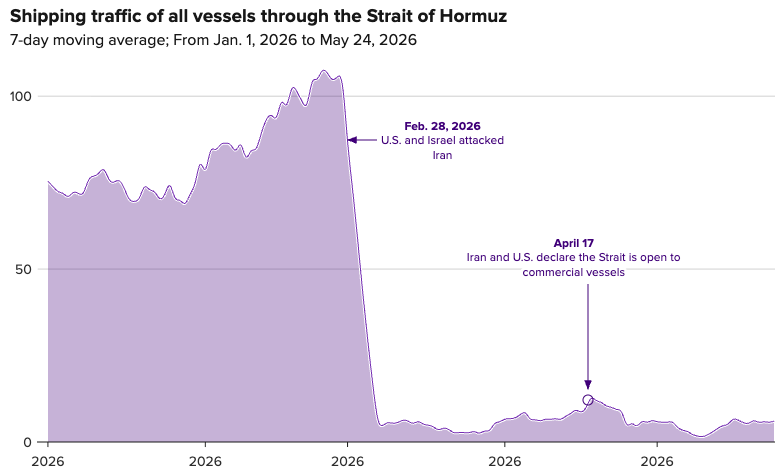
In spite of that, crude oil price is trading below $100 again, after jumping over that level briefly during yesterday’s session. We are still dealing with the consequences of the largest oil price disruption in the history of oil markets and it is quite surprising to see how relaxed the markets have been.
Yesterday, Chevron’s CEO gave an interview to Bloomberg TV stating that the inventories are being drawn down, that the U.S. exports can’t make up for the Hormuz disruption and that June and July will be the critical period for oil shortages. Given the circumstances, I’d reiterate what I wrote here: we ain’t seen nothing yet, unfortunately.
Hormuz disruption: we ain't seen nothing yet!

Yesterday I had the pleasure of joining journalist Mario Nawfal for an interview focused on the possible disruptions stemming from the regional war in the Middle East and which escalated very significantly with Donald Trump’s and Benjamin Netanyahu’s attack on Iran on 28 February 2026.
To learn more about TrendCompass reports please check our main TrendCompass web page. We encourage you to also have a read through our TrendCompass User Manual page. For U.S. investors: an investable, fully managed portfolio based on I-System TrendFollowing is available from our partner advisory (more about it here).

Today’s trading signals
With yesterday’s closing prices we have the following changes for the Key Markets portfolio:
