

In US, EU inflation picks up again
Key Markets report for Wednesday, 24 June 2026

With the onset of the 21st century “roaring 20s,” inflation has been one of the main concerns in macroeconomic analysis. Ever since 2008 Global Financial Crisis, the debt overhang has progressively worsened, and economic growth has remained sluggish in most developed economies in spite of the unprecedented measures taken to stimulate the economy. Massive money printing adopted by the monetary authorities inevitably exacerbates the risk of high levels of inflation in the near future.
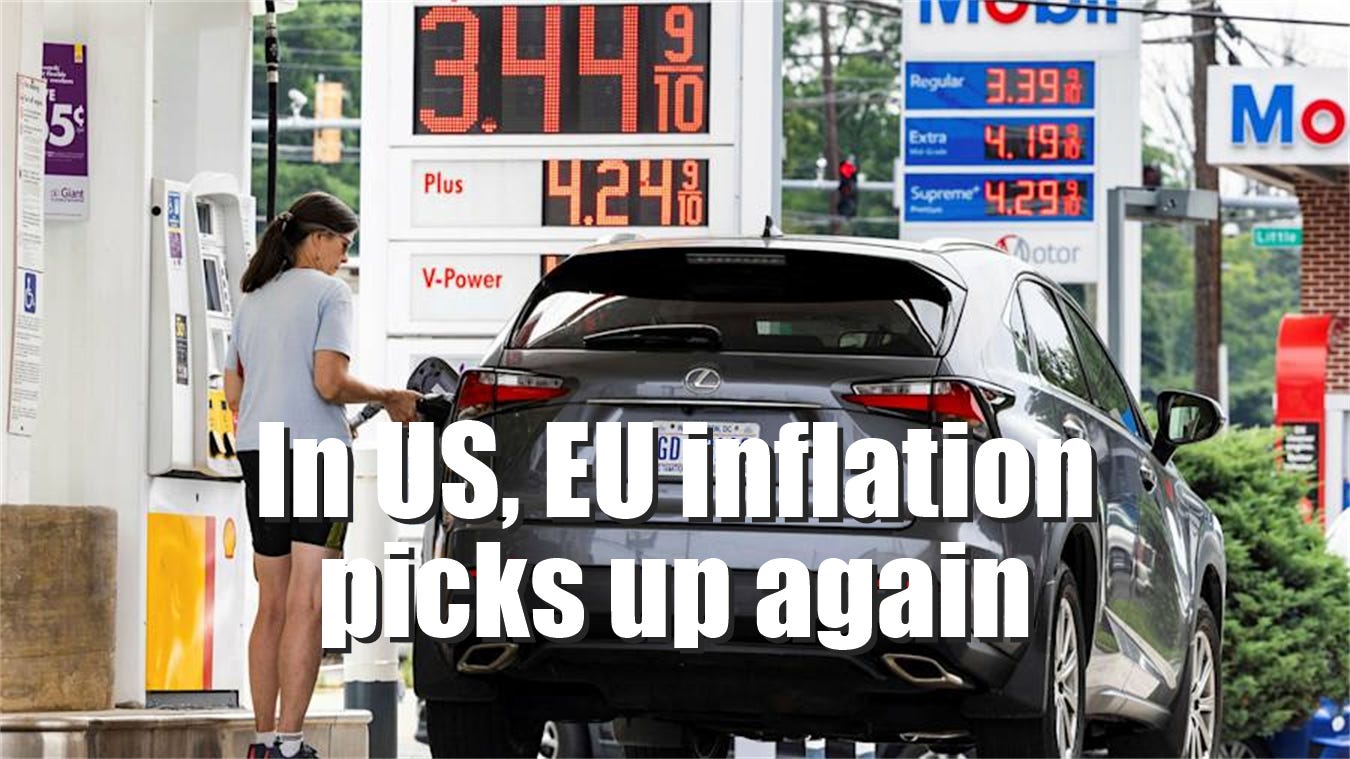
In the United States, which remains the Western world’s most resilient economy, inflation has spiked again. Consumer prices rose by 4.17% in May, compared to last year’s level:
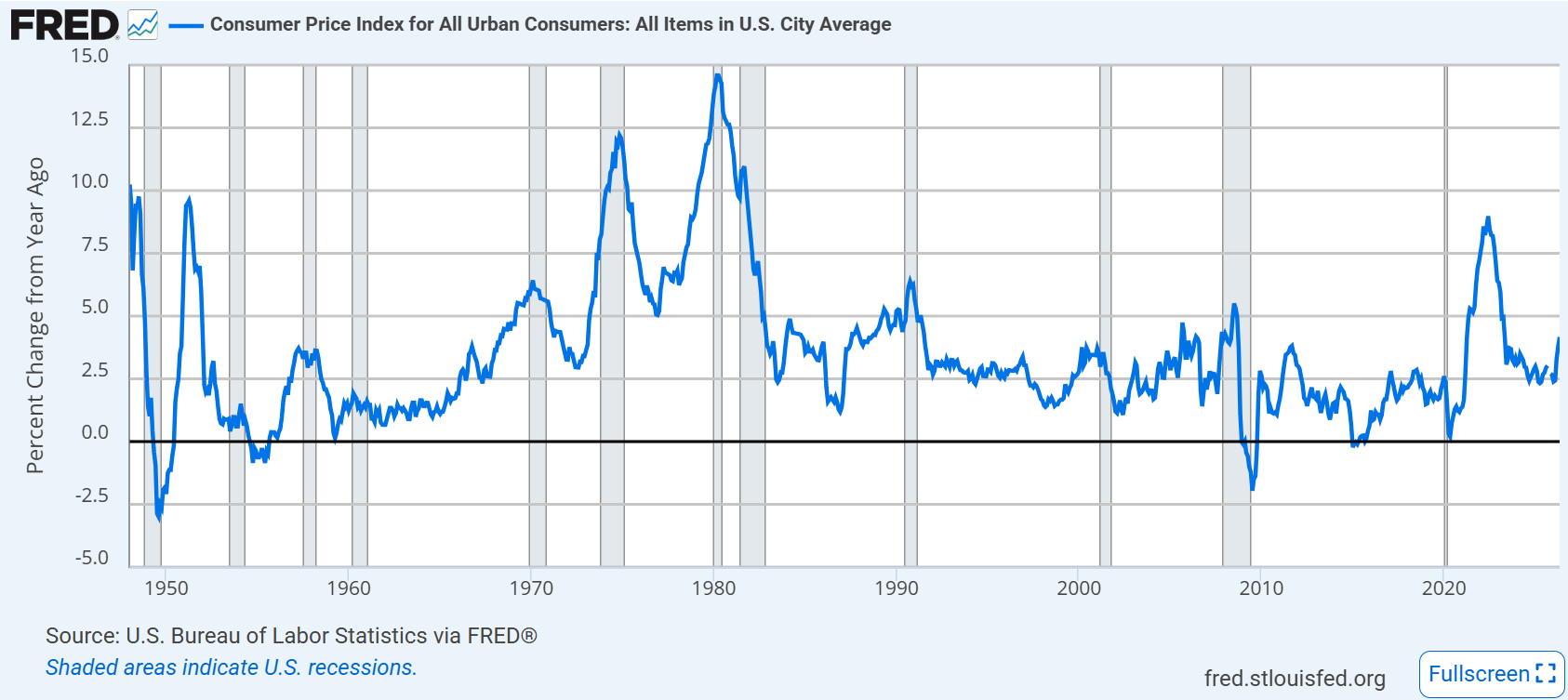
The long-term chart of US CPI shows that we have enjoyed an exceptionally long period of low inflation since the 1990s, which finally broke in 2021, spiking to nearly 9% in June 2022. Since then, inflation dropped back and stabilized around 2.5% but starting in March this year it recorded three consecutive monthly increases. This rise in inflation has been accompanied with a re-acceleration in the growth of money stock. The following chart shows the yearly percentage change in the growth of M2, which now reached 5.6%:
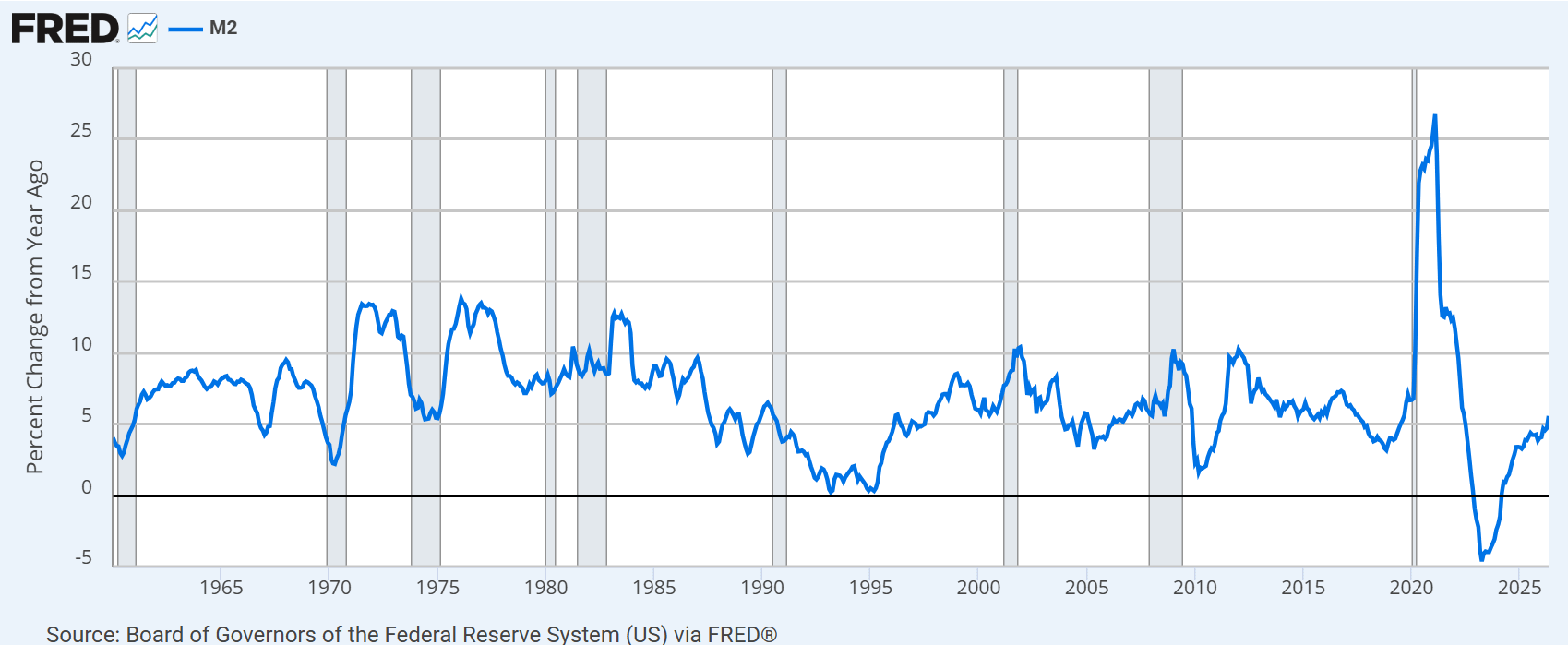
This is not yet in the high range as we saw in the aftermath of the Covid19 pandemic, but another worrisome inflation indicator suggests that we might have entered a new inflationary regime: the M2 money velocity has also been on the rise and it has now reversed its 30-year decline:
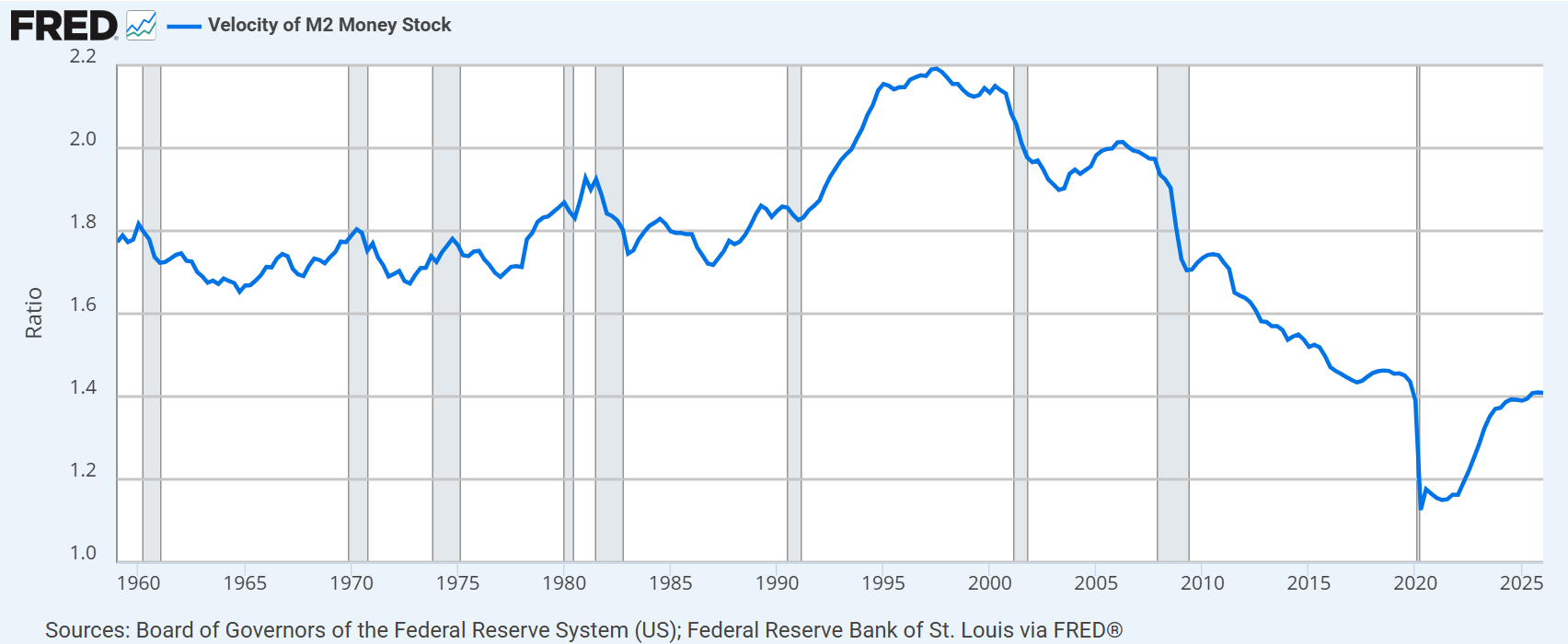
Money velocity is an indicator of how quickly the money circulates through the economy. It measures the average number of times a unit of currency is spent in a year’s time. The post-2021 surge in money velocity was the fastest on record. Even though the rate, at 1.4 remains low in historical terms, the fact that it has been rising since 2021 represents an added inflationary tailwind for the US economy.
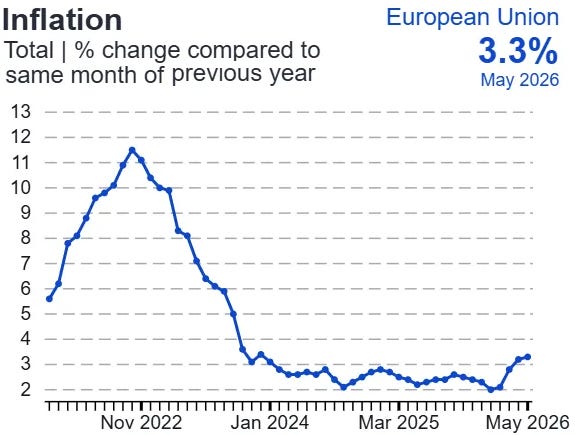
The EU is showing the same tendencies: after about two years of stable, “benign” inflation, last three months saw a substantial break to the upside:
Eurozone economies are showing very sluggish trends:
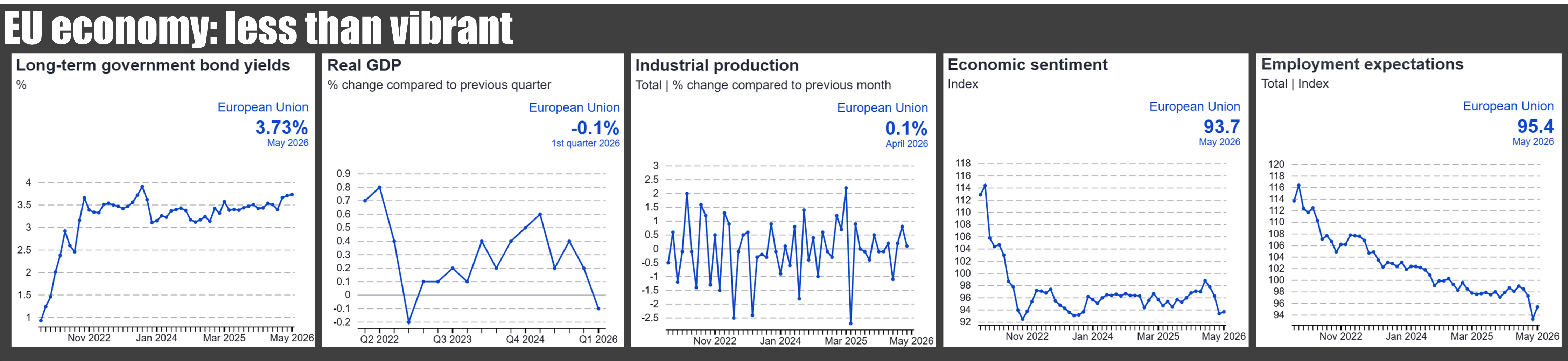
Interest rates are steadily rising, real GDP is shrinking, industrial production is growing near zero percent, economic sentiment is in the tank as are employment expectations. In fact, the shrinking GDP coupled with rising interest rates and inflation suggest that the EU has already entered a crisis of stagflation. Without growth, we can expect inflation to continue rising.
Inflation is an indiscriminate destroyer of wealth
Inflation is a formidable destroyer of wealth. Historical research shows that episodes of high inflation in market-oriented economies destroyed on average, more than half of the wealth of savers and investors. In his paper titled, ”Modern Hyper- and High Inflations,” published by the National Bureau of Economic Research (working paper No. 8930), Stanley Fischer showed that since 1960, over two thirds of the world’s market economies suffered episodes of inflation which exceeded 25% in at least one year. On average, investors lost 53% of their purchasing power during such episodes.
Nevertheless, many investors still don’t take this risk sufficiently seriously. This could be because investors, like everyone else, are accustomed to measuring their wealth in terms of currency units such as Dollars, Euros, or Yen. Inflation may leave investors’ wealth intact in nominal terms, but it destroys its purchasing power. Worse, in a stagflationary environment, in addition to losing the purchasing power, people also face substantially reduced job prospects coupled with rising costs of living.
Given the near-inevitability of these prospects for most Western economies, is it any wonder that our ruling establishments would prefer to turn our grievances toward an external enemy? Barbarians at the gates - again!
To learn more about TrendCompass reports please check our main TrendCompass web page. We encourage you to also have a read through our TrendCompass User Manual page. For U.S. investors: an investable, fully managed portfolio based on I-System TrendFollowing is available from our partner advisory (more about it here).

Today’s trading signals
With yesterday’s closing prices we have the following changes for the Key Markets portfolio:
