

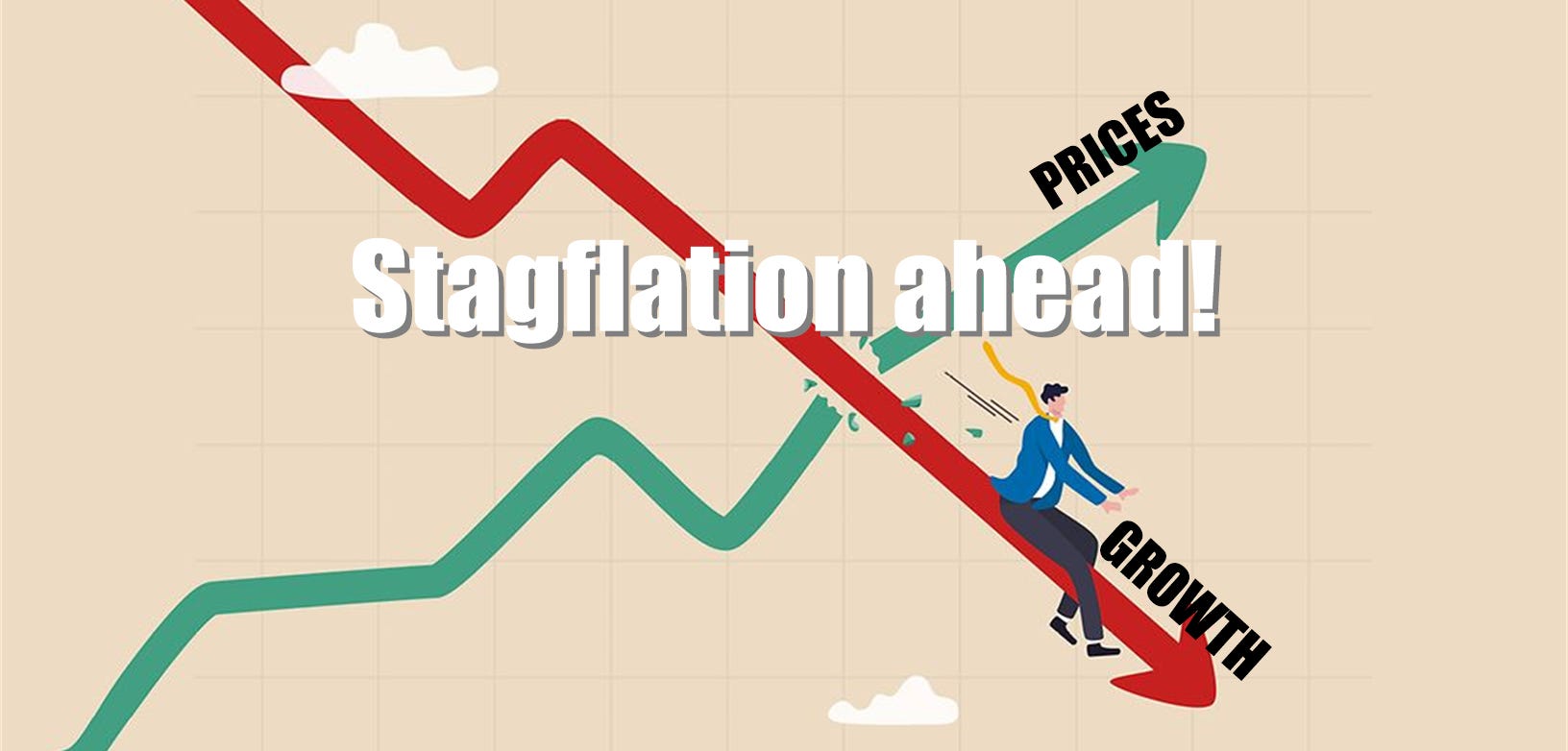
Price inflation is definitely picking up in the US and other G7 economies and in all likelihood, it will continue to accelerate over the coming months and years. The official measures of inflation may appear to be near “benign,” manageable levels, but the reality people are experiencing in daily life is very different, as the table below shows.
Positive thinking optimists will immediately notice that the price of white bread is down nearly 6%. Ramen is not on the list, but it can’t be too far off.
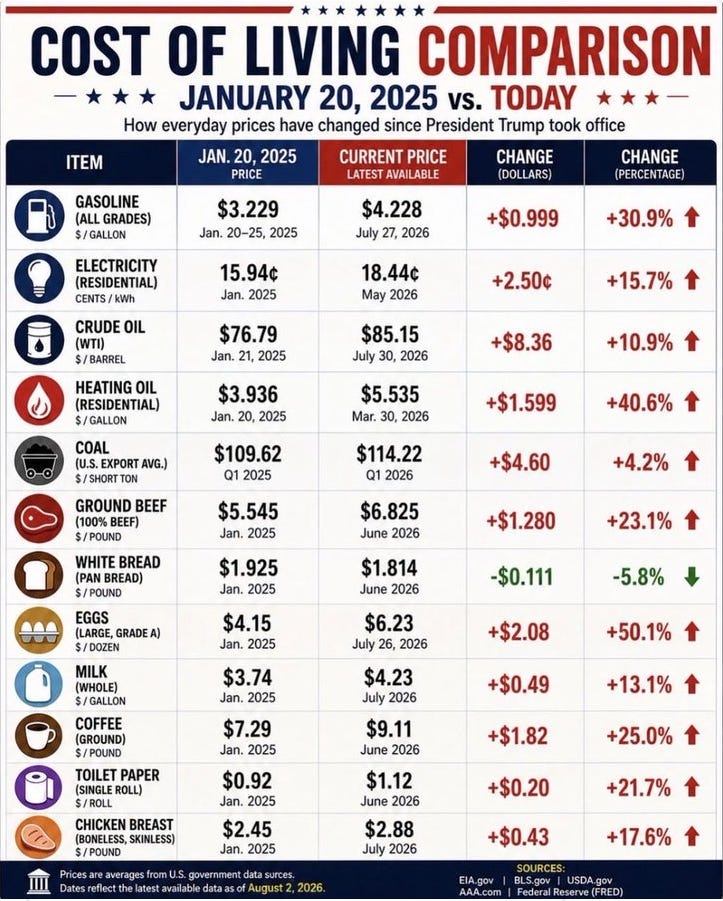
To be fair, nice infographics like this are usually put together for partisan politics, and this one frames the price increases as though they’re all Trump’s fault, which is only partly true. Trump’s needless escalation in the Middle East will probably catalyze an acceleration of price inflation, but the conditions that brought us to this point were set in motion a long time ago and they’re systemic. They’re baked into the monetary system and there’s no voting out of it. Who happens to occupy the White House when inflation hits the fan won’t significantly affect the forces that fuel inflation.
It’s not as bad as it looks - it’s much worse
We normally think of inflation as rising consumer prices because that’s what we experience in daily life. We don’t really experience the causes of inflation. It is thus understandable that we tend to define inflation in terms of its ultimate results and overlook its underlying causes.
Through history, runaway inflation episodes ensued when governments spent far in excess of their tax revenues. The pattern of events leading to out-of-control inflations begins with the breakdown of fiscal discipline and ballooning government spending, usually in pursuit of economic recovery or wars (or both). We are now deep in this territory as we discussed in last Friday’s TrendCompass (“Why governments can NEVER give up deficit spending.”)
To varying degrees, governments of all developed nations have followed the same fiscal path and by now, after years of binging on easy credit, they generated a mountain of unpayable debts. To cover the fiscal gap and start paying down the debts the old fashioned way, governments would have to increase taxes and drastically reduce spending. According to the IMF, closing the US fiscal gap would require an immediate and permanent doubling of all US federal taxes.
Austerity is a non-starter
Such severe austerity is a political issue, which pretty much cements the outcome: the political classes of sovereign nations always prefer profligate spending to fiscal discipline under the scientific/ideological cover of Keynesian economics. For one thing, austerity would further reduce economic activity and the government tax revenues with it. Soaring interest rates are worsening the already unsustainable debt burden. In addition, austerity might lead to social upheaval and push large segments of the economy onto black markets.
In short, austerity is tedious and depressing. By contrast, spending money is so much more fun, especially when you pursue fantasy projects like world domination, space technology and AI. Who knows, if we can level China, Russia and Iran, we might get a whole great virtuous cycle out if it, but by now it all looks like a long shot because all these nations are ganging up to defend themselves. Outcompeting them for market share will be difficult at this stage, especially China, so a stagflationary unravelling now looks like certainty.
Does deficit spending create an economic stimulus?
Deficit spending is usually justified as a “stimulus” for the economy, but that depends on how that deficit spending is spent. If it leads to increases in the system’s productivity and competitivenes, it could provide a meaningful stimulus to the economy. But if it’s squandered on military misadventures and insane vanity projects like a global AI monopoly, it could be as stimulating as digging up holes and covering them up again.
However, there’s another, systemic obstacle to stimulating the economy out of its hole and that’s the marginal productivity of debt. Marginal productivity of debt (MPD or MPoD) measures how much additional economic output (typically GDP) is generated by each new unit of debt or borrowing. Over time, for each new dollar of debt in the system you get less and less GDP. This has been the reality for all developed economies for many decades, as the following chart illustrates:
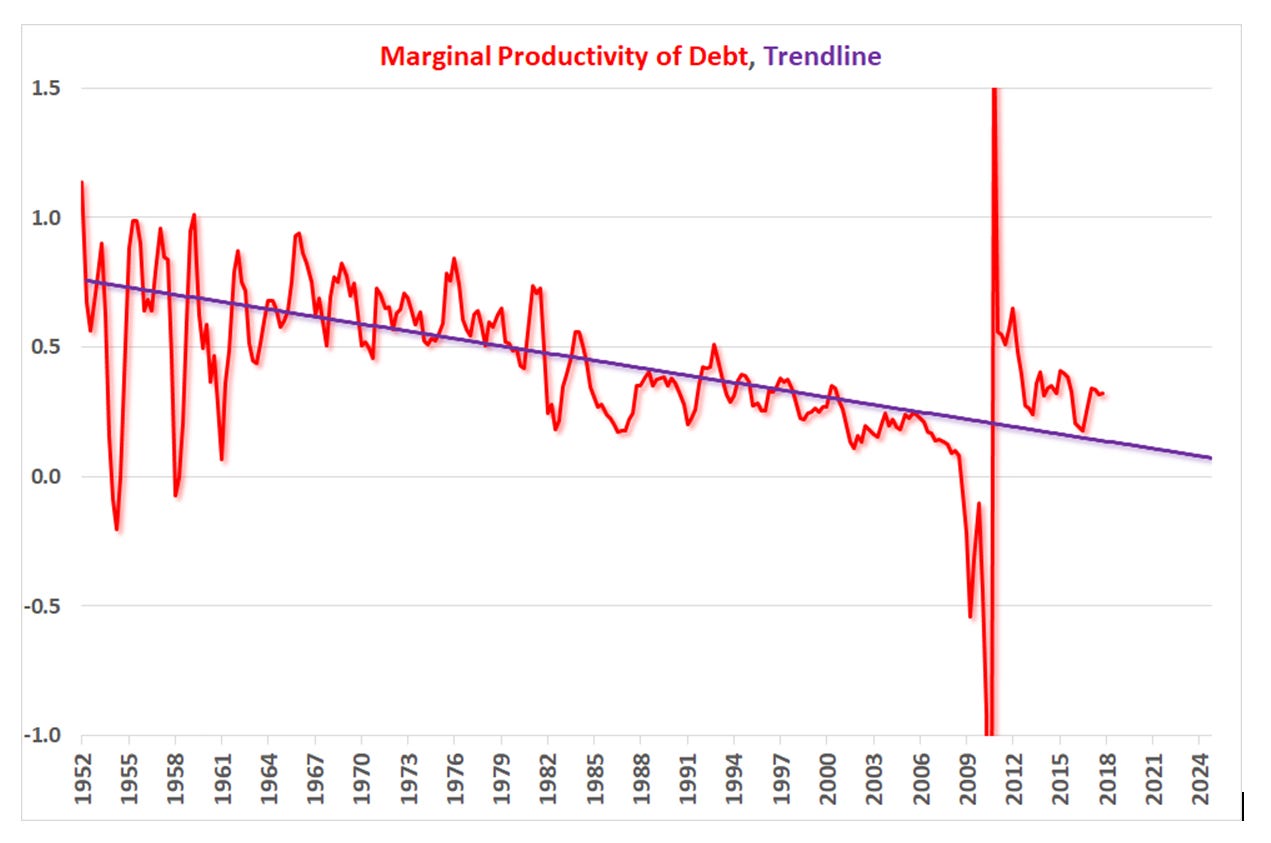
As Japan has demonstrated, even if you stimulate in unlimited amounts, the economy might not respond, leaving it in an inflationary recession, otherwise known as stagflation.
Money printing is the only trick left
As hopes of salvation through economic growth fizzle out and sovereign governments are unwilling to effect sufficiently stringent austerity, they have no recourse but to debase their currencies through inflation, the one form of taxation – as Milton Friedman put it – that can be imposed without legislation.
Gradual, controlled inflation is a normal part of the modern monetary systems, and we are used to currency losing 2% – 3% of its purchasing power each year. Things get problematic when central banks start monetizing government debt to sustain runaway spending. We have now passed that threshold as well, so the outcome is now all but guaranteed. Of course, central bankers and politicians will give us every reassurance, but the worse things get, the less reassuring their rhetoric will be.
Secretary Scott Bessent’s statements have already become head-scratchers, and I believe we’ll soon come face to face with radical measures (as discussed yesterday) and market ambushes. In this environment it would be very important to reduce risk, take certain strategic investments (ehm - silver and gold) in physical form, and explore share farming with your local farmers.
To learn more about TrendCompass reports please check our main TrendCompass web page. We encourage you to also have a read through our TrendCompass User Manual page. For U.S. investors: an investable, fully managed portfolio based on I-System TrendFollowing is available from our partner advisory (more about it here).

Today’s trading signals
With yesterday’s closing prices we have the following changes for the Key Markets portfolio:
