

Western world under oligarchs, part 2
Key Markets report for Tuesday, 3 February 2026

This is part 2 of a 2-part report. Part 1 with the link to YouTube video covering both parts is at this link.
Russia under oligarchs
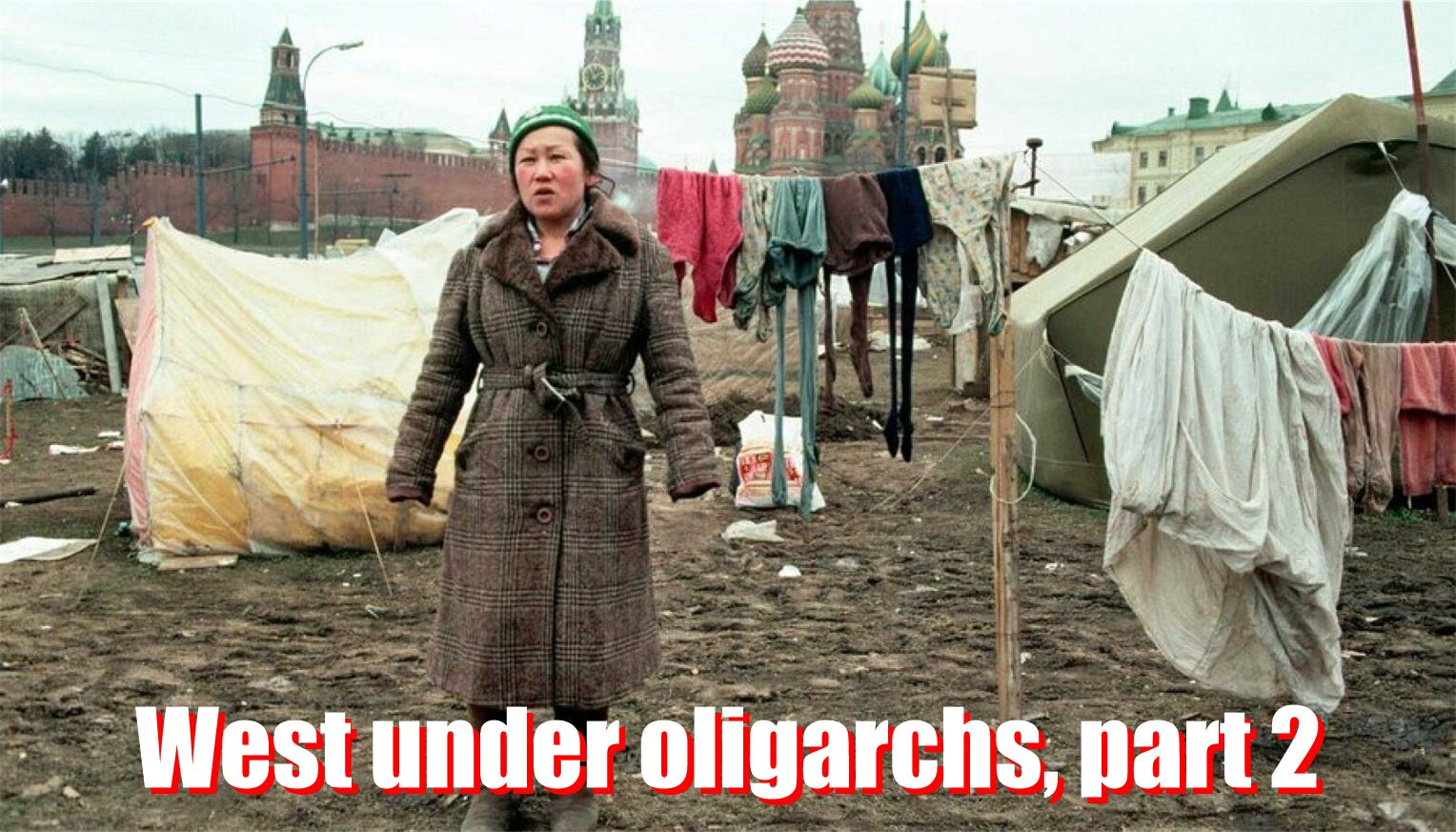
In modern times, the full pathogenicity of oligarchic rule was exemplified in Russia during the 1990s. When the Soviet Union collapsed in 1991, Russia began its transition from a communist dictatorship to a western-style democracy. But behind the façade of democracy, the real power was usurped by a small group of oligarchs, most powerful of whom was the Sembankirschina, the gang of seven bankers, all of whom were trustees of western financial interests. The seven and the companies they controlled were:
1. Boris Berezovsky – United Bank, Sibneft, ORT
2. Mikhail Khodorkovsky – Bank Menatep, Yukos
3. Mikhail Fridman – Alfa Group
4. Vladimir Vinogradov - Inkombank
5. Vladimir Gusinsky – Most Group, NTV
6. Vladimir Potanin – UNEXIM Bank
7. Alexander Smolensky – Bank Stolichny
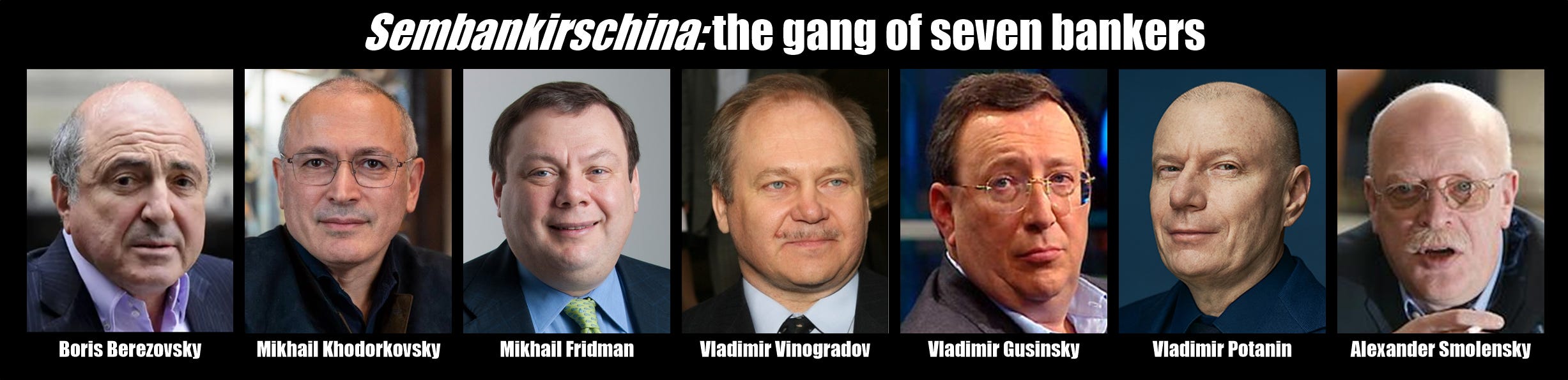
Behind the façade of democracy and her elected President Boris Yeltsin, this group dominated Russia. Boris Berezovsky, whom in 1997 US News & World Report called “the most influential new capitalist tycoon in Russia,” even bragged about his ability to appoint officials in the Yeltsin administration: “We hired Chubais. We invested huge sums of money. We guaranteed Yeltsin’s [1996] election. Now we have the right to occupy government posts and use the fruits of our victory.”
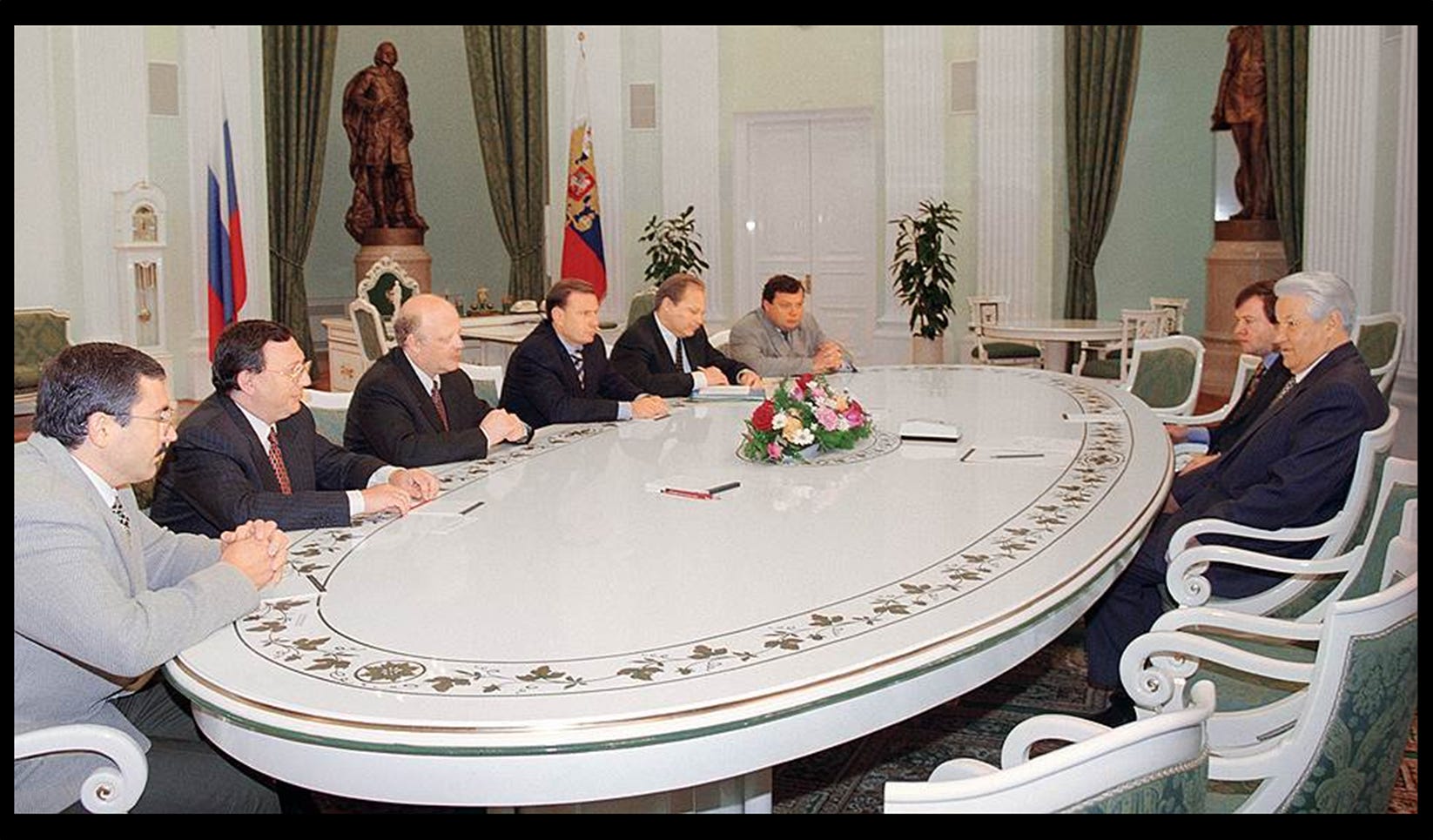
This was not just empty bravado. The way this “democracy” functioned behind the scenes was also described by the former Finance Minister, Alexander Lifshitz[1]:
“I personally had the occasion to feel the power of the so-called oligarchs. In 1996 when I was appointed chief economic adviser, they summoned me. They asked me to explain how things stood. There were 8 or 9 people there... the meeting took place in one of the biggest banks. One of them told me, quite frankly, ‘We brought Yeltsin to power, the country belongs to us and you’ll do what we tell you to do.’
I asked, what is it you want from me? They gave me a list of demands which included consultation with them about all decisions, the appointment of ministry personnel only with their consent, etc, etc. I asked, what happens if I don’t do as you say? They said, ‘you’ll no longer be a minister.’”
As in Rome, the effect of this system of governance was profoundly destructive. Public administration fell into disarray and law and order collapsed, along with the nation’s economy. During the 1990s, Russia experienced what was the longest economic depression recorded anywhere during the 20th century. In all, her GDP fell by 50%, which was worse even than during the German invasion in World War II.
Russia’s long depression
Death rate in Russia soared by 60% to a level only experienced by countries at war. Western and Russian demographers agreed that from 1992 to 2000, Russia sustained between five and six million excess deaths that couldn’t be explained by normal population trends. That figure represented between 3.4% and 4% of Russia’s total population. For perspective, during the whole of World War II, Britain lost 0.94% of its population, France lost 1.35%, China lost 1.89% and the US lost 0.32%.
As in the 1990s Russia, the dominant oligarchies throughout history consisted of moneylenders and bankers. An example was one of Julius Caesar’s assassins, Brutus. Far from being a devoted guardian of Rome’s Republican traditions, he was an oligarch and a rapacious usurer.
How Brutus financed Salamis
History records that in 56 BC, Brutus made a loan to officials of the Cypriot town of Salamis. Even though Rome set the legal limit on interest rate to 12%, Brutus demanded a 48% annual interest from the Salamis officials. As a member of the ruling class, he was more equal before the law than ordinary Romans were. To circumvent the legal limit on interest rates, he obtained Senate’s dispensation to that effect and his agents could demand payment in full from Salamis, which amounted to 200 talents of silver.
However, the town’s officials replied that by their calculation only 106 talents were owed. Refusing to lighten his demand, Brutus sent two envoys to Cyprus to enforce payment and collect his money. One of the two, Marcus Scaptius commanded a cavalry which laid siege to Salamis. According to Cicero’s Letters to Atticus written in 50 BC, five officials had starved to death during the siege.
We do not know how the story ends as Cicero’s term of office in Cilicia ended before the episode’s resolution, but we know that Brutus’s aggressive loan-sharking enforced by Roman legions was the Empire’s standard treatment of its provinces. Such practices have been replicated over many centuries, ultimately with the same effect: polarization of wealth, impoverishment of the masses, economic collapse and a steady descent down the road to perdition.
Same symptoms across geography and time
Today, many of these same symptoms of oligarchic rule are increasingly discernible across Western democracies, including chronic crises, gradual disappearance of smallhold farmers and affluent middle classes, decay of infrastructure and public administration, metastasizing censorship and an escalating political repression, including through lawfare.
At the same time, foreign policy of Western democratic nations is increasingly marked by their creeping militarization and perpetual warfare abroad. This is what Chomsky was referring to when he spoke of western world’s intractable problems. If today’s Western world is descending down the same destructive trajectory as other empires through history, how might we change course?
How can we avert the ultimate collapse of our societies? In more recent past, communist regimes around the world tried to institute egalitarianism, but this only substituted one kind of oligarchy for another and led to a collapse all the same.
There is an elegant solution…
There is, however, one approach worth considering: the one taken by Vladimir Putin since he took the helm in Russia. Without instituting populist redistribution of wealth or draconian purges, Putin simply took a firm stance with respect to Russia’s oligarchs, allowing them to run their business empires, but barring them from exercising political power.
On 28 July 2000, Putin summoned 18 of Russia’s most powerful tycoons, including the seven bankers, to a meeting at the Kremlin at which he laid out the rules of the game under his government. The privatizations of the 1990s would not be overturned and there would be no redistribution of wealth. Therefore, the oligarchs were free to continue running their enterprises and profiting from them. They were however expected to pay their taxes, treat their employees correctly and keep out of politics.
This might have seemed reasonable, but it was a shock for the oligarch who came to regard Russia as their own private fiefdom. A few of them felt they could challenge Putin’s new order. A legal battle erupted between the government and Berezovsky, Gusinsky and Potanin. The oligarchs lost and it became clear the new President meant business and had stronger political backing than the oligarchs.
Several months later, in January 2001, Putin summoned them once more and expressed hopes that things had changed for the better since their first meeting, and reassured them that the persisting rumors about the planned reversal of the 1990s privatization and about the imminent redistribution of private property were unfounded. He also informed them about certain institutional and legal changes that would affect their businesses aimed at improving the investment climate, but also closing the legal loopholes that enabled Russian companies to evade taxes through offshore transfer pricing.
Autocracy means that oligarchs are subordinate to the sovereign
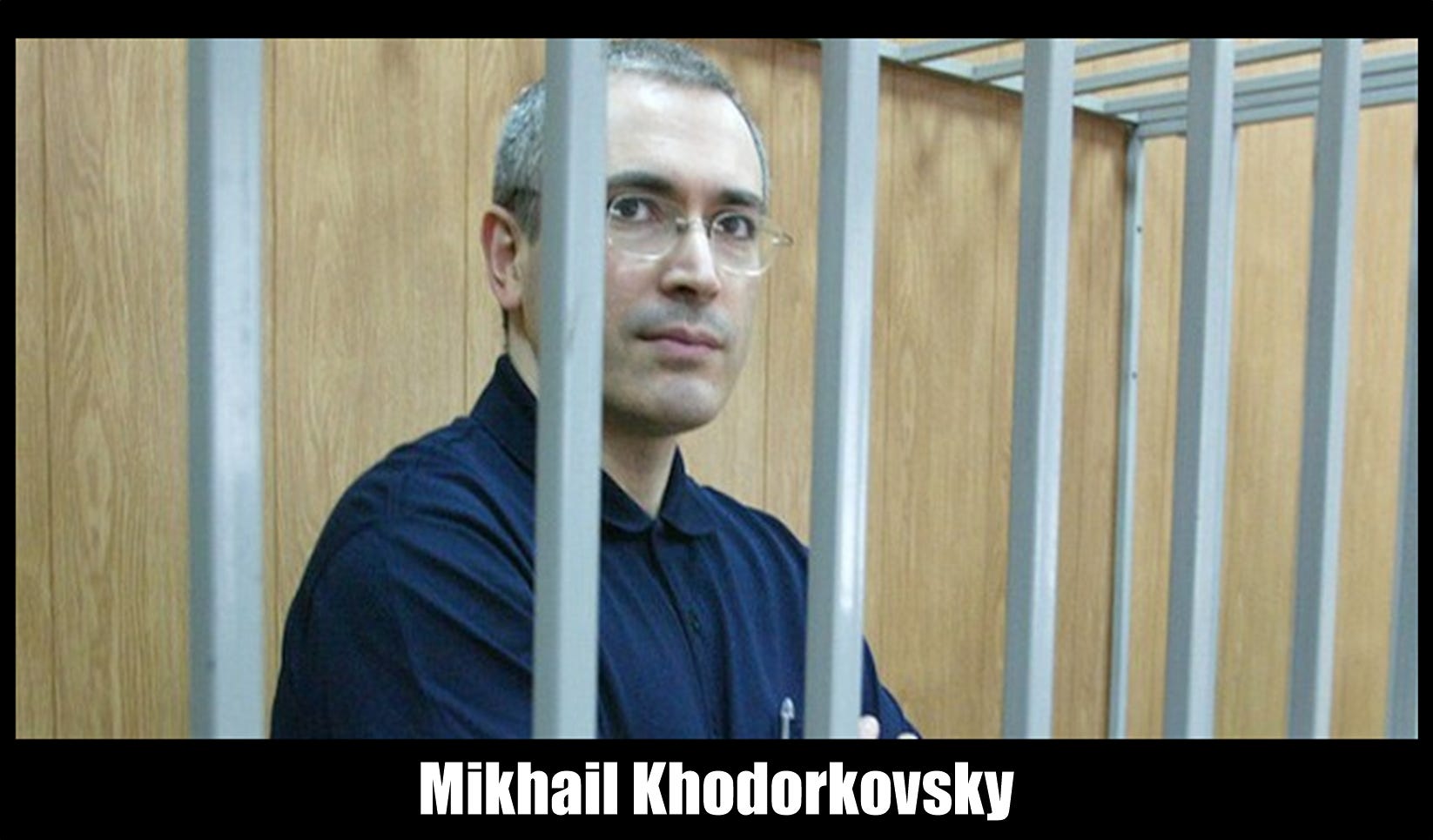
Most of the oligarchs were able to make peace with the new rules and only one of them, Mikhail Khodorkovsky continued to challenge the President. Ultimately, Khodorkovsky lost his liberty and served a 9-year prison sentence. Incidentally, Khodorkovsky, now a free man, explained his relationship with his “protector,” Jacob Rothschild, which I covered in this TrendCompass article: “Things they forgot to teach us in school…”

Vladimir Putin’s expedient seemed relatively simple and elegant, yet it has proven effective: by simply limiting the oligarchs’ political power he returned Russia to the rule of law and unsuffocated her economic development.
Under his stewardship, Russian economy and society improved in a rather spectacular way. And in spite of the persisting inequality between the haves and the have nots in Russia, he has drastically improved the living standards even of the least privileged members of society. Putin’s approach may seem alien from the viewpoint of the Western cultural tradition which overtly rejects such authoritarianism, even where it sought to counterbalance the excesses of the most privileged economic class.
Democracy means that oligarchy is unrestrained, subordinated to no one
When it comes to the oligarchy, Westerners tend to see no evil, hear no evil and speak no evil. But in light of the failure of our democracies to deliver as advertised, we must question our orthodoxies with an open mind: where do they come from, and what outcomes do they facilitate? For centuries, the way Catholic clergy and the gentlemen scholars of the British Empire interpreted history for us invariably glorified the democratic heritage of Greece and Rome.
The idea of democracy, along with Roman law, had struck the foundations of our Western system of governance and shaped our culture. But in doing so, Western civilization has also filtered out many relevant lessons of history, especially those about the economic, political and social dynamics that determined the course of history. This is especially true of the role of moneylending oligarchies and the financial debts they invariably generated.
In fact, the role of financial elites and debt has been consistently obscured in history and continues to be obscured to this day. For example, when Penguin Classics published the translation of Livy‘s “Civil War,” its editors omitted three key paragraphs of the original work which revealed that the ultimate cause of Punic Wars stemmed from usury and Rome’s ruinous overhang of unpayable debts. Given that Livy is our main source on Punic Wars, censoring his prose from a 2,000 years’ distance is in itself a revealing oddity.
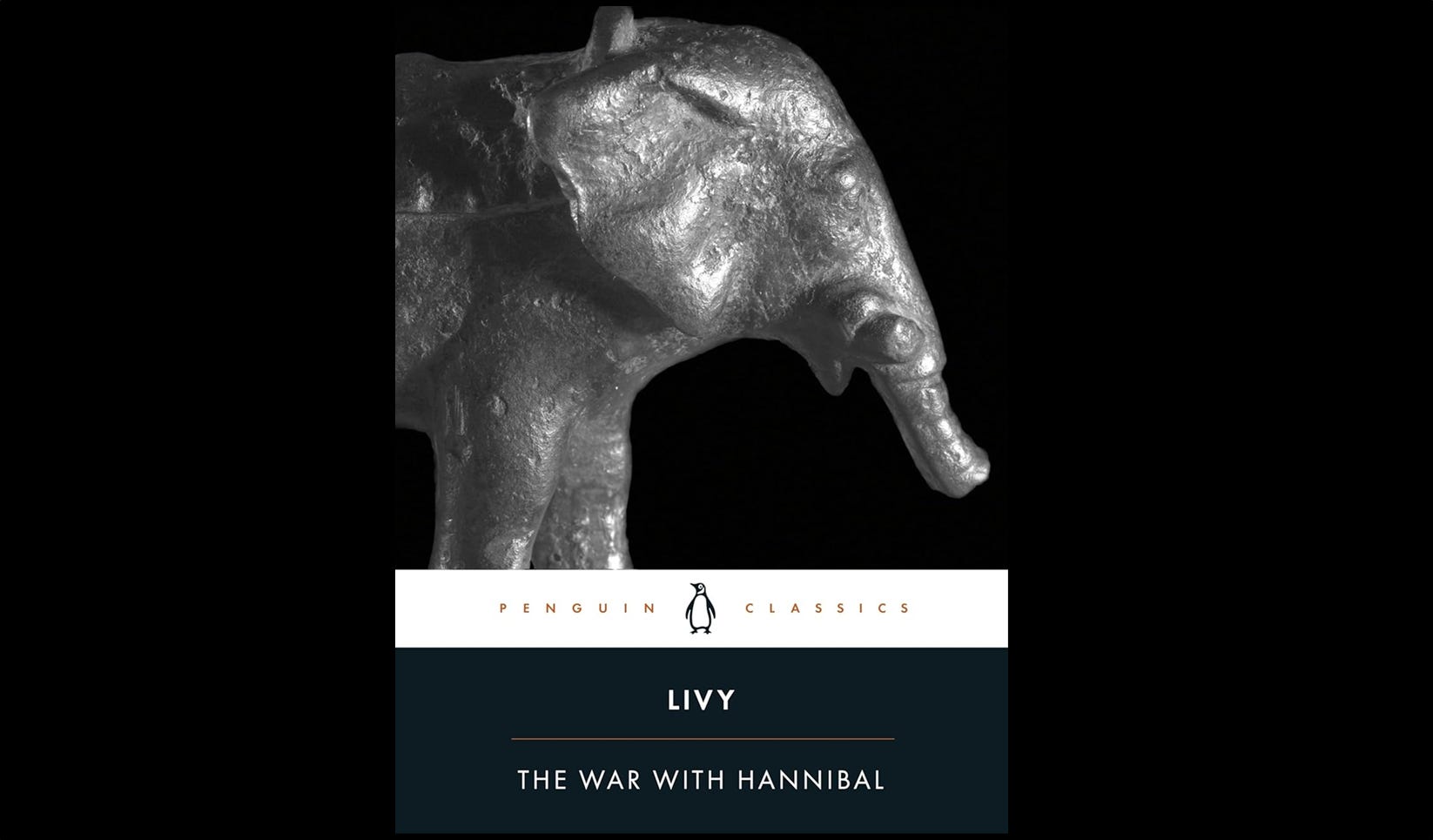
Fortunately however, modern historiography is beginning to catch up with these issues, formulating more substantive lessons of history for us to digest. Michael Hudson’s “The Collapse of Antiquity,” Michael Parenti’s “The Assassination of Julius Caesar,” and Terry Jones’ “The Barbarians,” which partly informed the writing of this article, are good examples of such scholarship.
Western system destroyed six major civilizations
Many still believe that the West has earned the privilege to lecture everyone else because freedom, democracy, human rights, etc.: we’ve achieved great technological progress haven’t we? Maybe we never built pyramids and no longer build cathedrals, but we do build plenty of malls, warehouses and parking lots. And we are all equal before the law (some are even more equal), our property rights are almost inviolable, our freedom of expression is almost sacrosanct, and we have awesome stock markets!
However, we still have to acknowledge the pathogenicity of our system of governance which may be unique in humanity’s history: over the past 500 years, it has destroyed six major indigenous civilizations around the world and extinguished hundreds of nations, ethnicities, kingdoms and tribes. It’s depopulated vast swathes of the earth of its native populations and it continues to foment forever wars against all who oppose it. Our system of governance demands total subordination and seeks to destroy all who refuse to subordinate.
Noam Chomsky rightly said that, “Education is not memorizing that Hitler killed six million Jews. Education is understanding how millions of ordinary Germans were convinced that it was required. Education is learning to spot the signs of history repeating itself.”
[1] Interview given in the documentary film “The Rise and Fall of the Russian oligarchs.”
To learn more about TrendCompass reports please check our main TrendCompass web page. We encourage you to also have a read through our TrendCompass User Manual page. For U.S. investors: an investable, fully managed portfolio based on I-System TrendFollowing is available from our partner advisory (more about it here).

Today’s trading signals
As I’d written about silver on a few occasions during the past two weeks, I’ll add this (since silver is not included with Key Markets): this morning we had multiple buy signals for silver.
With yesterday’s closing prices we have the following changes for the Key Markets portfolio:
